




Advertisement
Advertisement
Most teenagers refrain from using drugs. This is supported by data from a government survey that has been in place for 50 years but is now at risk.
The entire 17-member U.S. government team responsible for the National Survey on Drug Use and Health received layoff notices on Tuesday, part of a restructuring effort within the U.S. Department of Health and Human Services.
It remains uncertain if there is a backup plan for analyzing the data, which is crucial for local and state governments in developing prevention strategies and treatment services. The federal government allocates grant money to combat the opioid addiction crisis based on this data. Researchers also rely on it to study trends in depression, alcoholism, and tobacco use.
HHS spokesman Andrew Nixon stated that the survey, mandated by Congress, will continue to be "a vital contribution to the advancement of America’s behavioral health." He indicated that the department’s reorganization aims to be "better positioned to execute on Congress’s statutory intent."
The nationally representative survey is conducted in person by an independent research group with approximately 70,000 participants each year. According to Lindsey Vuolo of the Partnership to End Addiction, it offers a more comprehensive view than trends in overdose deaths, which only reflect a small part of the issue.
"We use its findings almost daily in our research, educational programming, resources, and communication materials," Vuolo remarked regarding the survey.
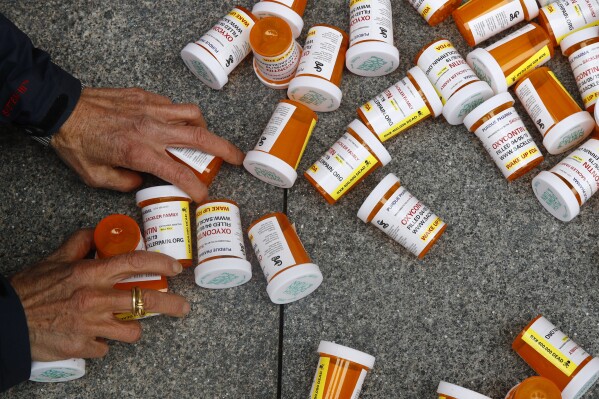
A protester gathers containers that resemble OxyContin bottles during an anti-opioid demonstration in front of the U.S. Department of Health and Human Services headquarters in Washington on April 5, 2019. (AP Photo/Patrick Semansky, File)
A protester gathers containers that look like OxyContin bottles at an anti-opioid demonstration in front of the U.S. Department of Health and Human Services headquarters in Washington on April 5, 2019. (AP Photo/Patrick Semansky, File)
Prior to the layoffs, the government team was set to analyze 2024 data, marking the first year since the pandemic that trends would again be reliable, according to Jennifer Hoenig, the recently laid-off director of the Office of Population Surveys.
Now, the data risks remaining unused without skilled analysts to interpret it, she noted.
"Every team member involved was dismissed," Hoenig said. The office is a part of the Substance Abuse and Mental Health Services Administration, which is slated to be integrated into a new Administration for a Healthy America under Health Secretary Robert F. Kennedy Jr.'s proposal.
"My team and I are deeply committed to this data, and we want people to realize what could be lost if it’s not available," Hoenig expressed.
Recent findings from the survey have revealed:
— In 2023, seven out of ten adolescents abstained from using illicit drugs or alcohol.
— Men aged 60 and older were more prone to substance use disorders than women in the same age bracket, although women were more likely to experience a major depressive episode in 2021 and 2022.
— In 2023, lesbian, gay, and bisexual youth were about twice as likely as their straight peers to have a substance use disorder.
— The percentage of individuals reporting cannabis use in the past year nearly doubled over two decades, rising from 11% in 2002 to 21.9% in 2022.
"Data is crucial when addressing any public health issue," stated Andrew Kessler of Slingshot Solutions, a consulting firm focusing on addiction and mental health. "It enables us to advocate for and implement policies that address significant treatment gaps, thereby saving lives."

Advertisement
Advertisement
Advertisement


