




Advertisement
Advertisement
If you enjoy flying and gazing at the clouds, it might be wise to take some health precautions.
There are generally two types of travellers: those who prefer the window seat and those who opt for the aisle.
While each choice has its own advantages, we can all agree that the window seat is often the most coveted.
However, the drawbacks may outweigh the scenic views.
Advert
A TikTok video made by a flight attendant highlights the risks of sitting with the window shade open.
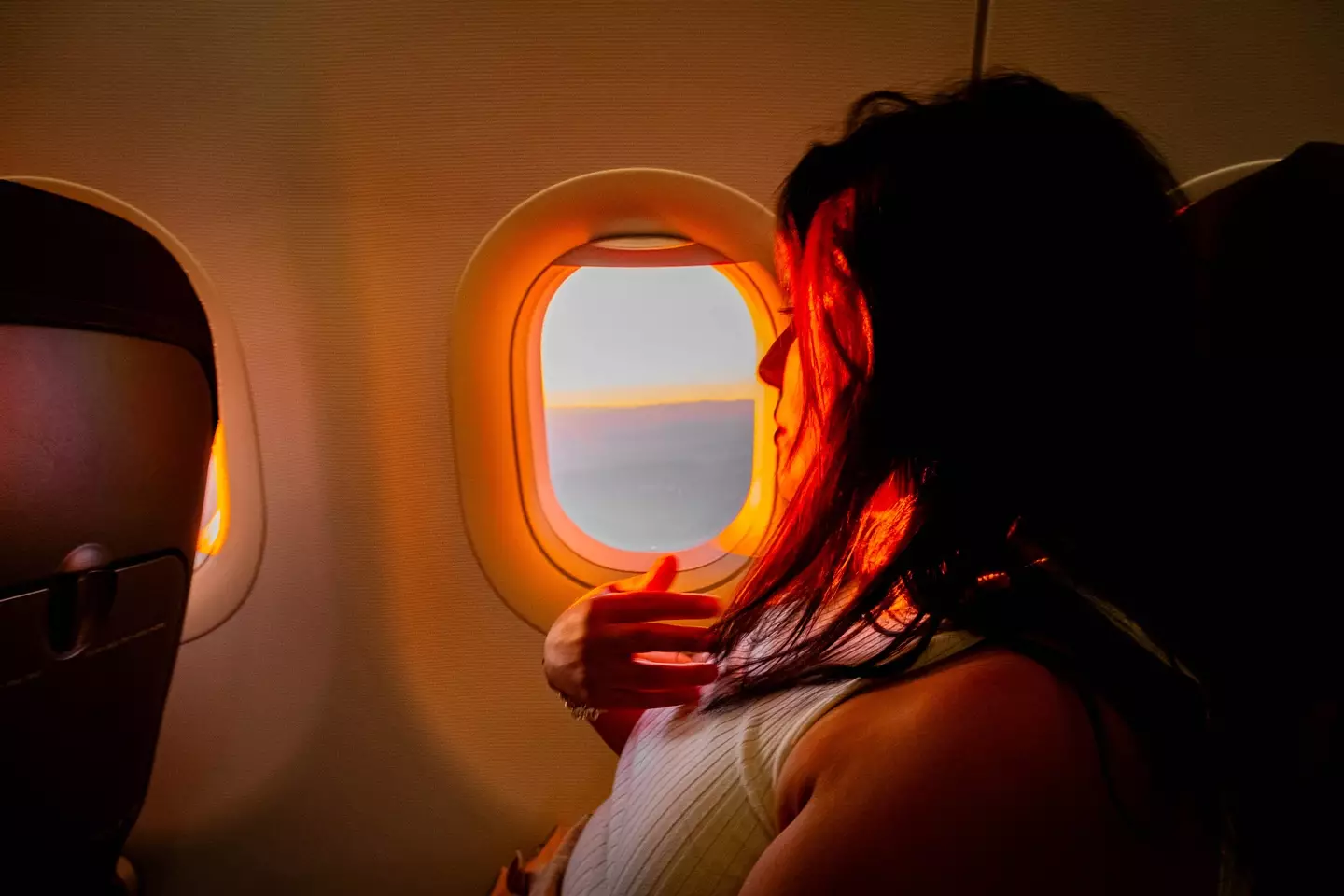
Aislinn Swain, a flight attendant and bodybuilder, discussed the potential dangers of occupying the best seat on the plane.
In her video, she expressed: “As a flight attendant, I can't believe I didn't learn this sooner.”
Advert
Aislinn advised that you should protect your skin just as you would if sunbathing on a beach.
This is due to the fact that the ultraviolet exposure during a short flight is comparable to spending 20 minutes in a tanning bed.
She explained: “Spending just 60 minutes in a window seat on a flight exposes you to as much UV radiation as 20 minutes in a tanning bed.”
Aislinn cautioned: “AND cabin crew and pilots are twice as likely to develop skin cancer.”
Advert
The flight attendant advised viewers to wear sunscreen and keep their shades drawn to reduce UV exposure.
Many commenters were surprised by this information, as they were unaware of the risks to their skin during flights.
One commenter stated: “I'm a flight attendant, oh no.”
Advert
Another person remarked: “Considering how often people fly compared to how many x-rays they undergo, they should be more concerned about in-flight radiation. It's not insignificant.”
An expert, however, was already aware, writing: “Former x-ray tech here. I always found it amusing when patients worried about radiation exposure yet talked about their recent long-haul flights. LGA-LAX is 0.04mSv. A chest x-ray is 0.1mSv.”
According to The Skin Cancer Foundation, airplane windows filter out UVB rays, but not UVA rays, which are linked to skin cancer.
Studies have shown that UVA intensity at cruising altitude can be up to three times greater than at ground level.
Advert
Research from the University of Manchester indicated that pilots might experience as much UVA exposure in an hour in the cockpit as from 20 minutes on a sunbed.
A 2015 study revealed that pilots and cabin crew had approximately twice the rate of melanoma.
However, it's unclear if this is due to leisure time spent on the ground or time in the aircraft.
The Skin Cancer Foundation recommends applying sunscreen with an SPF of 30 or higher before boarding a plane and reapplying during long flights.
They also suggest wearing protective clothing.
This includes wearing long sleeves, keeping window shades down, and choosing aisle seats to minimize exposure to UV rays.
Advertisement
Advertisement


Advertisement


